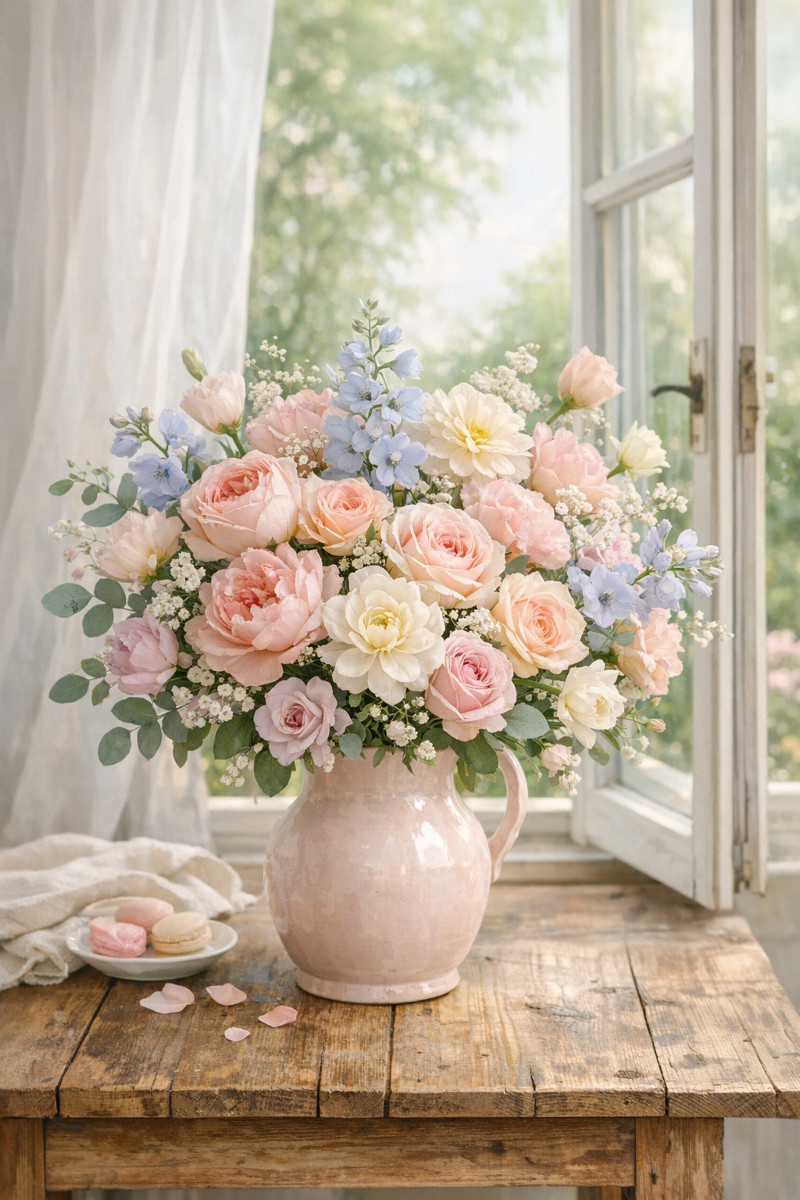

It is a universal tragedy: you spend a small fortune on a stunning bouquet of peonies or lilies, only to have them looking like a sad, wilted science experiment forty-eight hours later.
Most people just plop flowers in a vase and hope for the best, but if you treat them like the living (albeit dying) organisms they are, you can easily double their lifespan. Here is how to keep your blooms from checking out early.
1. Sterilize the Vase First
If you wouldn’t drink out of the glass, don’t put your flowers in it. Bacteria is the primary reason flowers wilt; it clogs the stems and prevents water uptake. Before you even think about water, scrub your vase with hot, soapy water or a splash of bleach. A “clean-looking” vase from the cupboard often still harbors enough dried-on bacteria to ruin a fresh bouquet.
2. The 45-Degree Angle Rule
Never use kitchen scissors to cut your stems—they tend to crush the vascular system of the plant rather than slicing it. Use sharp garden shears or a floral knife.
- Cut at a 45-degree angle: This prevents the stem from sitting flat against the bottom of the vase, which would block water intake.
- Cut under water (if possible): This prevents tiny air bubbles from entering the stem and creating an “embolism” that blocks hydration.
3. Strip the “Water Line” Foliage
Any leaves submerged in water will eventually rot. Rotting vegetation introduces a massive amount of bacteria into the water and releases ethylene gas, which tells the rest of the flower to hurry up and die. If a leaf is going to be below the water line, rip it off.
4. Keep Them Away from the Fruit Bowl
This is the most common mistake. Ripening fruits—especially apples and bananas—emit ethylene gas. While this gas helps fruit ripen, it acts as a “death signal” for flowers, causing them to drop petals and wilt prematurely. Keep your arrangement on a dining table or entryway, far away from the kitchen counter.
5. Use “Flower Food” (Or Make Your Own)
Those little plastic packets aren’t a marketing gimmick. They contain three essential ingredients: sugar for energy, an acidifier to lower pH, and bleach to kill bacteria. If you ran out of packets, you can make a DIY version:
| Ingredient | Purpose |
|---|---|
| 1 tsp Sugar | Food source |
| 1 tsp Bleach | Bacteria killer |
| 2 tsp Lemon Juice | pH balancer |
| 1 Quart Water | Base |
6. Temperature Matters
Direct sunlight and heat sources (like radiators or electronics) accelerate evaporation and aging. For maximum longevity, keep them in a cool, draft-free spot. In fact, many professional florists recommend putting your bouquet in the refrigerator overnight if you have the space—it’s why flower shops keep their inventory in coolers.
7. The Two-Day Refresh
Most people just “top off” the water when it gets low. This is a mistake. Every two days, you should:
- Empty the vase completely.
- Rinse the stems.
- Re-trim about half an inch off the bottom of the stems to open up fresh “pores.”
- Refill with fresh, room-temperature water and new food.
Pro Tip: If you have woody-stemmed flowers like Hydrangeas that have started to wilt, try “shocking” them. Dip the bottom inch of the stems in boiling water for 30 seconds, then immediately move them to room-temperature water. This can often clear stubborn blockages in the stem.